
Low-prep indoor imagination
Indoor storytelling activities for kids: low-prep games for rainy days
Indoor days do not require complex craft supplies or endless screen time. A few low-prep storytelling games—like passing an unfinished tale around the circle, turning mystery household items into hero props, or drawing an alternate ending—turn restless energy into creative confidence.
Activity at a glance
- Audience
- Parents, guardians, and children ages 3–8
- Duration & preparation
- 10 to 20 minutes · Under 2 minutes; gather 2–3 everyday items
- Materials
- Common household objects (spoon, sock, key, toy)
- Paper and pencils or crayons
- Blankets or cushions for a cozy story nook
Adaptations
- • For solo child play: parent acts as co-creator and scribe.
- • For siblings: pass turns clockwise with a timer or soft ball.
- • For quiet time: transition to a cozy narrated audio story.
Published by: ELEN Story AI · Updated
Activity 1: The Mystery Object Adventure (10–15 minutes)
Gather three random household objects: for example, a wooden spoon, an old key, and a green sock. Place them in a basket in the center of the room.
The challenge: invent a two-minute story where all three items become magical or essential tools. The adult can start the scene: "Captain Pip needed to cross the Whispering River, but the ferry had vanished..." The child decides which object comes to the rescue and what happens next.
- Step 1: Collect 3 unrelated household objects.
- Step 2: Adult sets a playful beginning dilemma.
- Step 3: Child selects an object and describes how the hero uses it.
Activity 2: Pass the Tale (One Sentence at a Time)
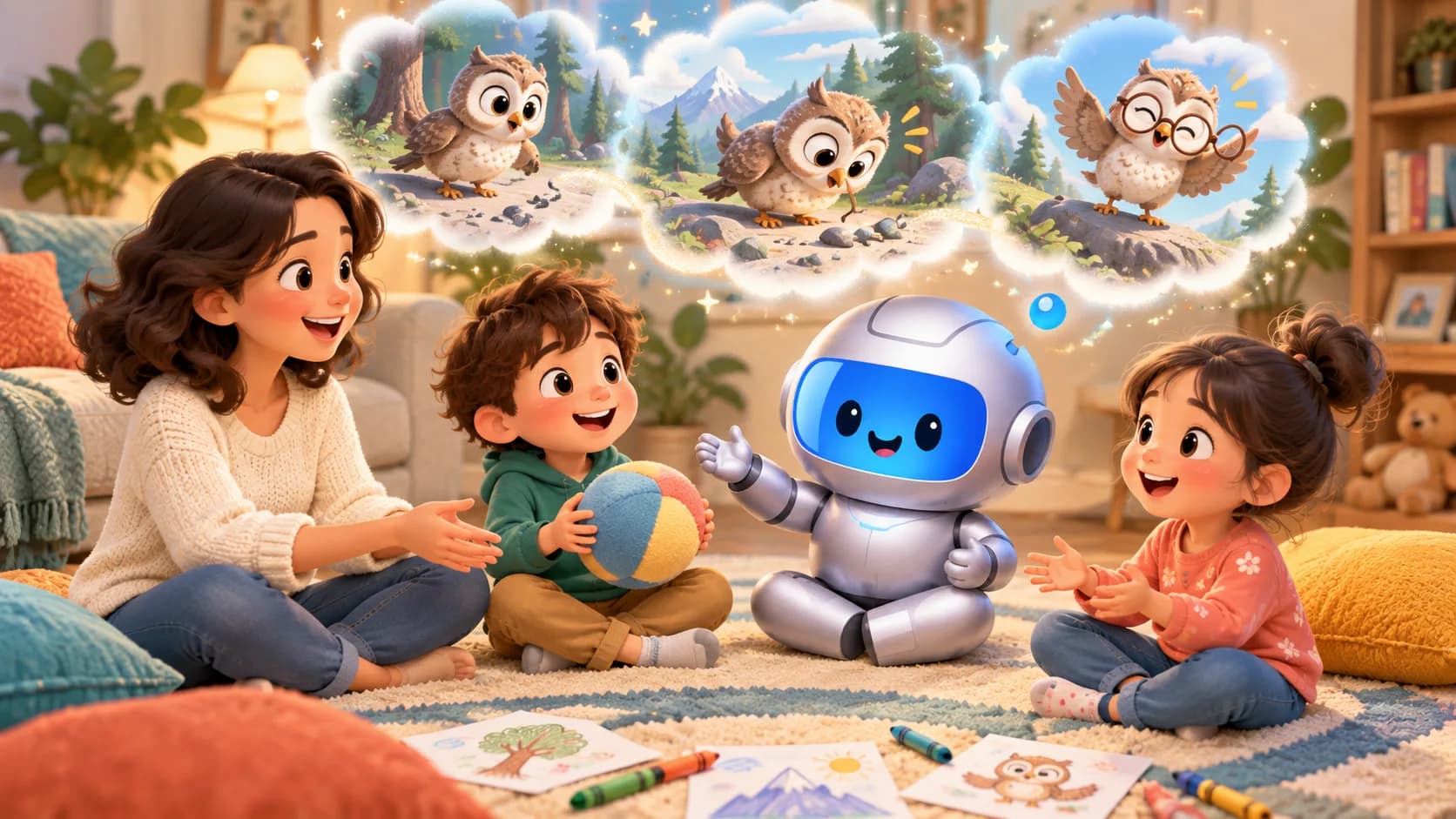
Sit in a circle and roll a soft ball to pass speaking turns. Each person contributes exactly one sentence to build an unfolding adventure.
This game builds narrative sequencing, listening skills, and patience. To keep the story grounded, agree on a simple hero and goal before starting (e.g., "A baby owl trying to find its missing spectacles").
- Establish hero, setting, and goal in advance.
- Each person adds one sentence: "Suddenly...", "Fortunately...", "Because of that..."
- Bring the adventure to a gentle conclusion after 6–8 rounds.
Activity 3: Draw the Alternate Ending
Pick a story you both enjoy—such as one of our short stories for kids or 5-minute bedtime stories—and stop reading right before the final climax.
Give your child a blank sheet of paper and invite them to draw how they want the story to resolve. Once the drawing is complete, read the original ending together and compare the two creative solutions.
- Pause before the story’s final page.
- Draw or narrate an alternate surprise ending.
- Celebrate creative differences with no wrong answers.
Activity 4: Living Room Story Fort & Audio Theater
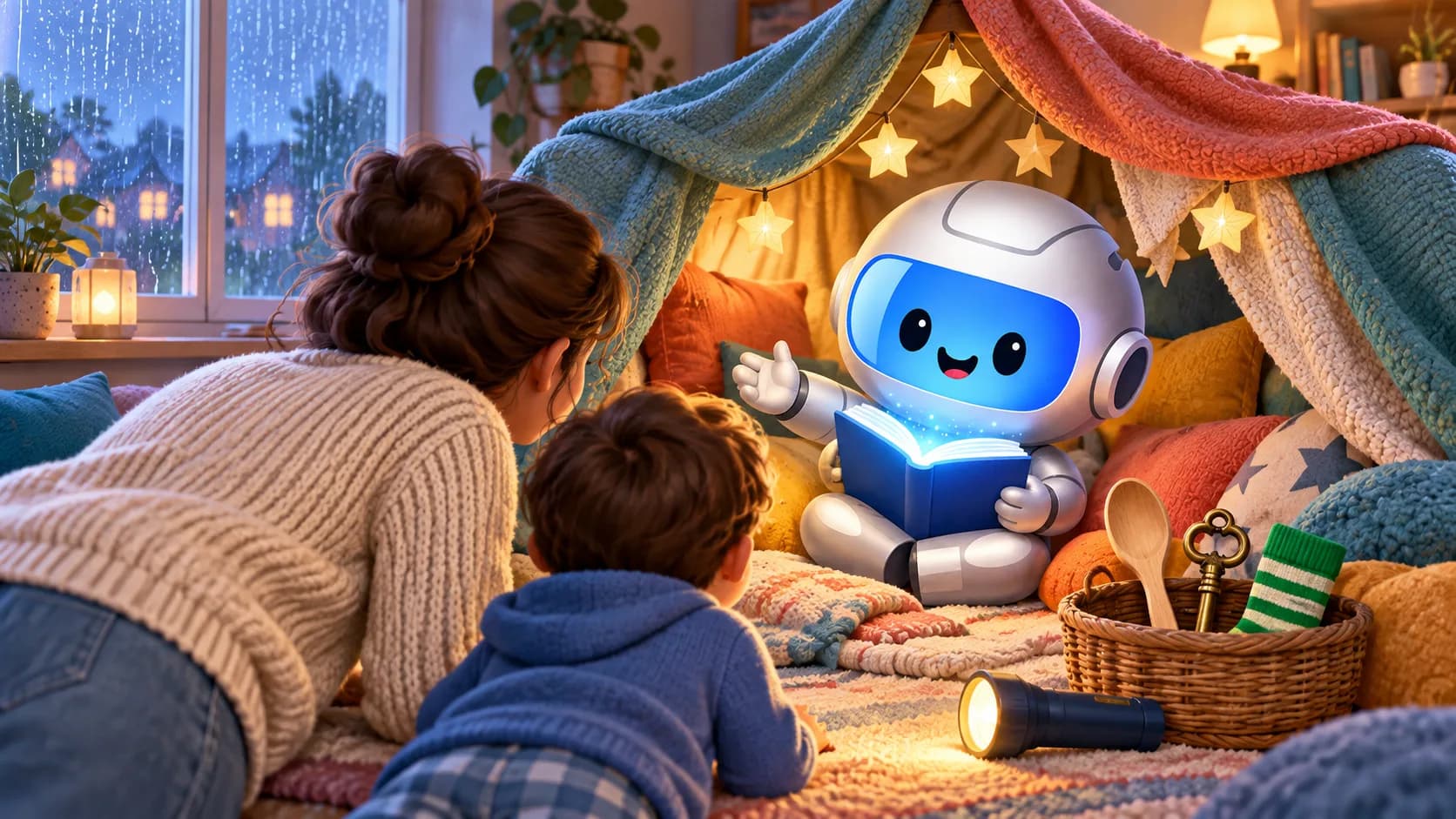
Transform rainy day cabin fever into a magical reading cave using two chairs and a blanket. Bring inside a flashlight, a pillow, and a quiet story.
Inside the fort, take turns reading aloud or listen to a gentle narrated story. Talk about the sound effects, character emotions, and what the characters might do tomorrow.
Parent tips for screen-free storytelling
Children love unexpected twists and silly mishaps. Avoid correcting their ideas or steering them toward adult realism. If a dinosaur wants to bake strawberry pancakes, encourage the detail!
If you need fresh inspiration, an adult can create a custom story on ELEN tailored to your rainy day adventure, review the pages, and bring it to your story fort.
Make a story for your family
Describe the idea, choose a broad content level and language, then review the finished story before sharing it with a child profile.
Questions parents ask
What age is best for indoor storytelling games?
These activities work wonderfully for children ages 3 to 8. Younger children thrive with physical props and sound effects, while older children enjoy inventing intricate plot twists.
What if my child gets stuck or says "I don't know"?
Offer two silly choices to spark their imagination: "Did the dragon sneeze glitter, or did he turn into a bouncy ball?" Giving a playful fork in the road removes the fear of a blank page.
How do storytelling games help with reading?
Storytelling games develop narrative comprehension, vocabulary, and sequencing—the exact cognitive foundations children rely on when learning to read independently.
Can we record our family stories?
Yes! Writing down your child’s spoken sentences on paper or in a family notebook helps them see the direct connection between spoken thoughts and printed words.


